*Epidemiology of vestibular vertigo H. K. Neuhauser http://www.neurology.org/content/65/6/ 898.short
OUR PROCESS
Three Steps to a Dizziness-Free Life
Step: 1
Comprehensive Evaluation
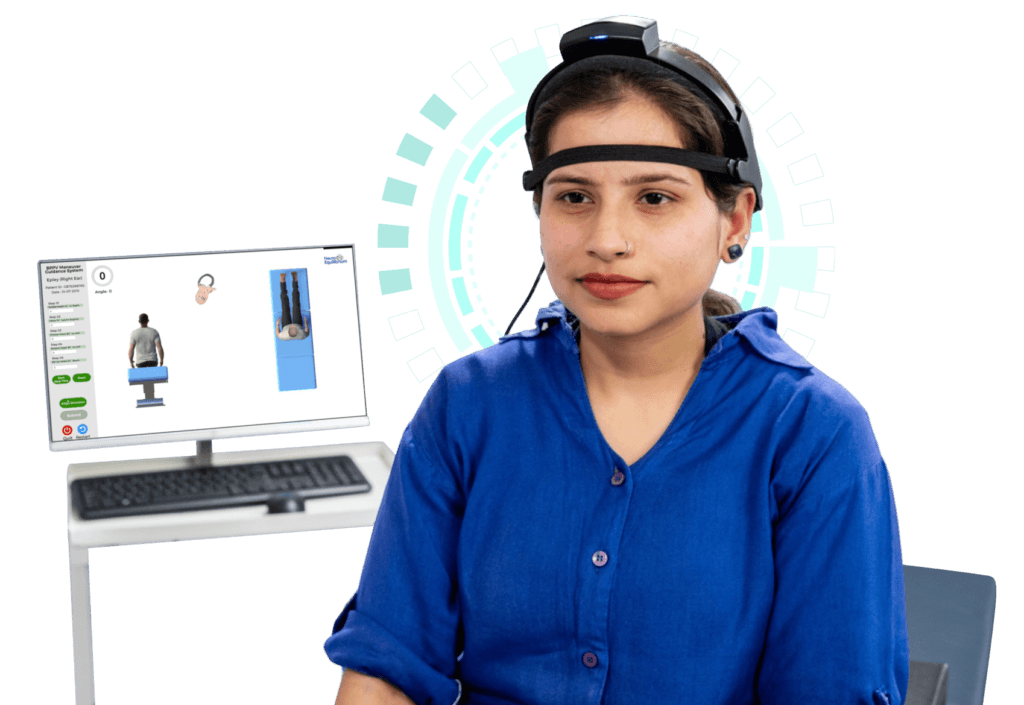
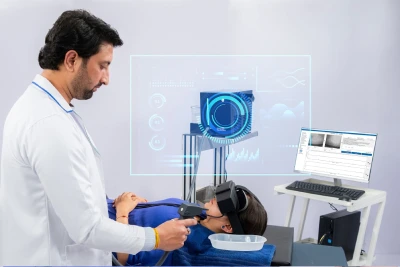
Your journey begins with a detailed consultation and our proprietary non-invasive Vertigo Profile Test — using state-of-the-art VNG, vHIT, and posturography equipment.
Step: 2
Personalised Treatment Plan
Based on your diagnosis, we design a bespoke treatment plan — from particle repositioning maneuvers for BPPV to vestibular rehabilitation and targeted medication protocols.
Step: 3
Ongoing Support & Recovery
Post-treatment care includes virtual reality-based online rehabilitation, teleconsultation, and counselling — so you recover fully and prevent recurrence.
Worldwide care with 300+ partner clinics in 90+ cities. Find your city and schedule your consultation today.
We're expanding! Although we don't have a clinic in your city yet, we're constantly growing. Call us to find your nearest clinic to get complete treatment for your Vertigo.
With our state-of-the-art equipment that is not available elsewhere, we ensure the most precise & comprehensive evaluation of your condition.
World class facility
Our clinics ensure that the diagnosis and treatment for your vertigo and dizziness are delivered as per international standards.
Customized Treatments
The advanced treatments we offer are as per global protocol. These treatments are designed to address the underlying causes of vertigo & dizziness, providing lasting relief & cure.
PATIENT VOICES
Hear it from our patients
Real stories of recovery — in their own words, in their own language.
Vertigo is a feeling of spinning or imbalance (chakkar). Patients may describe it in different ways like spinning, dizziness, giddiness, imbalance, rocking or feeling that they may fall. Vertigo can present as acute attacks or recurrent episodes.
What causes Vertigo?
Vertigo can be caused by many kinds of disorders of the balance system. Most commonly they are due to inner ear problems. They may also be due to central nervous system, systemic disorders like inadequately controlled BP or psychological disorders. Amongst the commoner causes are disorders like Benign Paroxysmal Positional Vertigo (BPPV), Meniere’s disease, Vestibular migraine, Labyrinthitis, Vestibular neuritis, head injury stroke, etc.
What is BPPV?
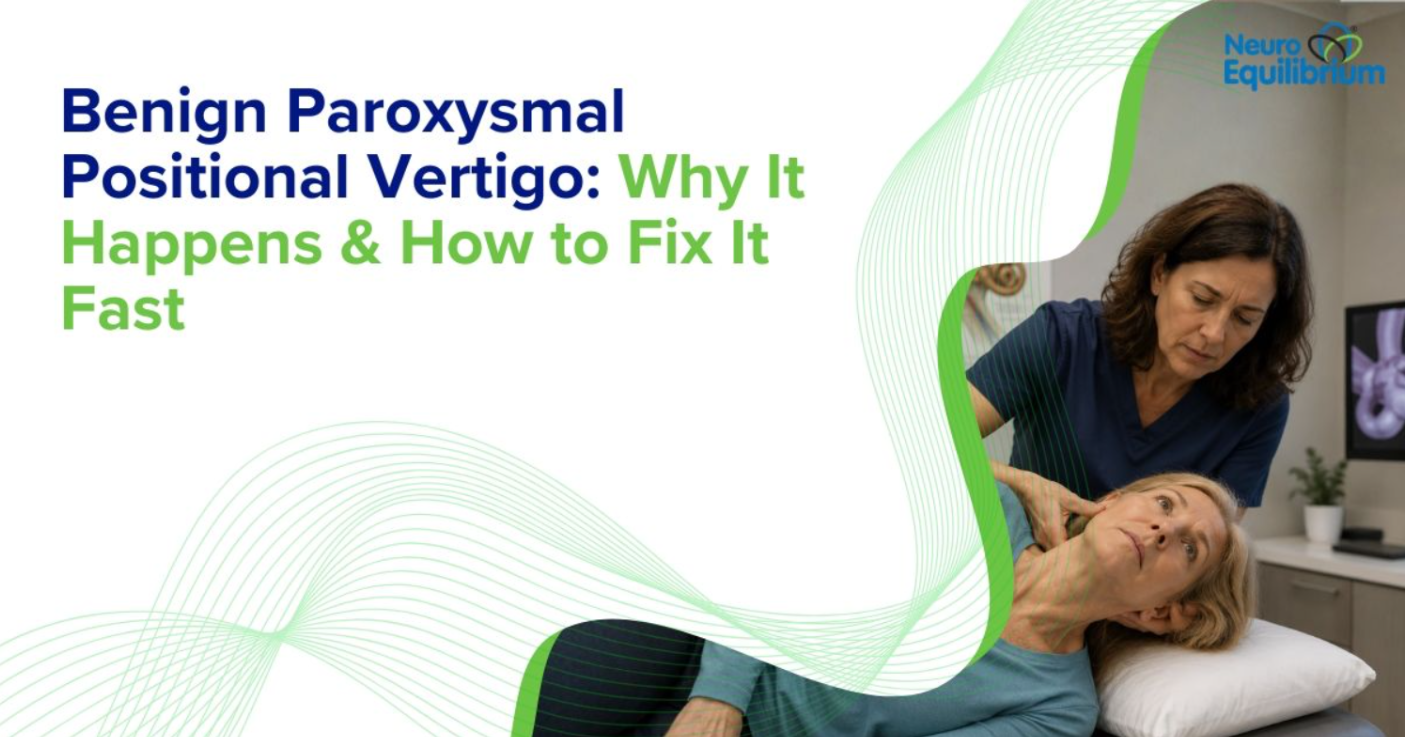
BPPV (Benign Paroxysmal Positional Vertigo) is one of the most common causes of vertigo. In this condition, the patient complains of spinning on getting up from bed or turning the head to certain positions. BPPV is caused by a displaced calcium carbonate crystals with the inner ear. It is treated by identifying the position of the crystals in the ear and repositioning them with specific exercises (maneuvers).
What is VNG?
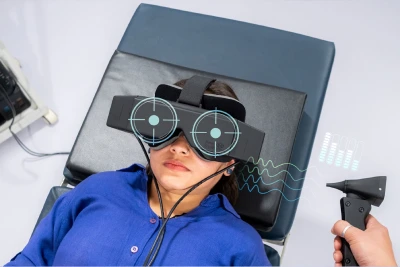
VNG or video nystagmography is an important test to evaluate dizzy patients. High speed infra red cameras are used to record eye movements in different tests. The tests allow the doctor to check the functioning of different parts of the balance system and their connections in the brain.
What are the tests to determine the underlying cause of vertigo?
After a detailed history, the vertigo patient should undergo a thorough vestibular evaluation. This will include tests like Videonystagmography, Caloric test, Subjective Visual Vertical and Dynamic Visual Acuity. Some patients may require an MRI of the brain. Audiometric tests to measure the hearing function should also be done.
How can Vertigo be treated?
Vertigo is treatable ! A series of tests done by your doctor will help identify the cause of your vertigo. Once the cause is identified, treatment with medicines or rehabilitation exercises would be advised.
Why is it critical to treat vertigo?
Any defect in the balance system resulting in vertigo, unsteadiness or imbalance will affect the day-to-day activities of the patient and diminish the quality of life. It may cause a drop in the confidence of the patient as well as induce a fear of falling or movement. Treating vertigo will help restore the balance and confidence of the patient. The fear of movements may cause the patient to restrict themselves to a sedentary lifestyle and lead to depression or anxiety.
What causes Vertigo?
Vertigo can be caused by many kinds of disorders of the balance system. Most commonly they are due to inner ear problems. They may also be due to central nervous system, systemic disorders like inadequately controlled BP or psychological disorders. Amongst the commoner causes are disorders like Benign Paroxysmal Positional Vertigo (BPPV), Meniere’s disease, Vestibular migraine, Labyrinthitis, Vestibular neuritis, head injury stroke, etc.
What is BPPV?
BPPV (Benign Paroxysmal Positional Vertigo) is one of the most common causes of vertigo. In this condition, the patient complains of spinning on getting up from bed or turning the head to certain positions. BPPV is caused by a displaced calcium carbonate crystals with the inner ear. It is treated by identifying the position of the crystals in the ear and repositioning them with specific exercises (maneuvers).
What is VNG?
VNG or video nystagmography is an important test to evaluate dizzy patients. High speed infra red cameras are used to record eye movements in different tests. The tests allow the doctor to check the functioning of different parts of the balance system and their connections in the brain.
How can Vertigo be treated?
Vertigo is treatable ! A series of tests done by your doctor will help identify the cause of your vertigo. Once the cause is identified, treatment with medicines or rehabilitation exercises would be advised.
What are the tests to determine the underlying cause of vertigo?
After a detailed history, the vertigo patient should undergo a thorough vestibular evaluation. This will include tests like Videonystagmography, Caloric test, Subjective Visual Vertical and Dynamic Visual Acuity. Some patients may require an MRI of the brain. Audiometric tests to measure the hearing function should also be done.
What is Vertigo?
Vertigo is a feeling of spinning or imbalance (chakkar). Patients may describe it in different ways like spinning, dizziness, giddiness, imbalance, rocking or feeling that they may fall. Vertigo can present as acute attacks or recurrent episodes.
What causes Vertigo?
Vertigo can be caused by many kinds of disorders of the balance system. Most commonly they are due to inner ear problems. They may also be due to central nervous system, systemic disorders like inadequately controlled BP or psychological disorders. Amongst the commoner causes are disorders like Benign Paroxysmal Positional Vertigo (BPPV), Meniere’s disease, Vestibular migraine, Labyrinthitis, Vestibular neuritis, head injury stroke, etc.
What is BPPV?
BPPV (Benign Paroxysmal Positional Vertigo) is one of the most common causes of vertigo. In this condition, the patient complains of spinning on getting up from bed or turning the head to certain positions. BPPV is caused by a displaced calcium carbonate crystals with the inner ear. It is treated by identifying the position of the crystals in the ear and repositioning them with specific exercises (maneuvers).
What is VNG?
VNG or video nystagmography is an important test to evaluate dizzy patients. High speed infra red cameras are used to record eye movements in different tests. The tests allow the doctor to check the functioning of different parts of the balance system and their connections in the brain.
How can Vertigo be treated?
Vertigo is treatable ! A series of tests done by your doctor will help identify the cause of your vertigo. Once the cause is identified, treatment with medicines or rehabilitation exercises would be advised.
Why is it critical to treat vertigo?
Any defect in the balance system resulting in vertigo, unsteadiness or imbalance will affect the day-to-day activities of the patient and diminish the quality of life. It may cause a drop in the confidence of the patient as well as induce a fear of falling or movement. Treating vertigo will help restore the balance and confidence of the patient. The fear of movements may cause the patient to restrict themselves to a sedentary lifestyle and lead to depression or anxiety.
Can a severe vertigo condition be cured?
Vertigo is treatable! Identifying the cause of your vertigo will help the doctor decide whether you require medicines or exercises to control your problem.
What are the tests to determine the underlying cause of vertigo?
After a detailed history, the vertigo patient should undergo a thorough vestibular evaluation. This will include tests like Videonystagmography, Caloric test, Subjective Visual Vertical and Dynamic Visual Acuity. Some patients may require an MRI of the brain. Audiometric tests to measure the hearing function should also be done.