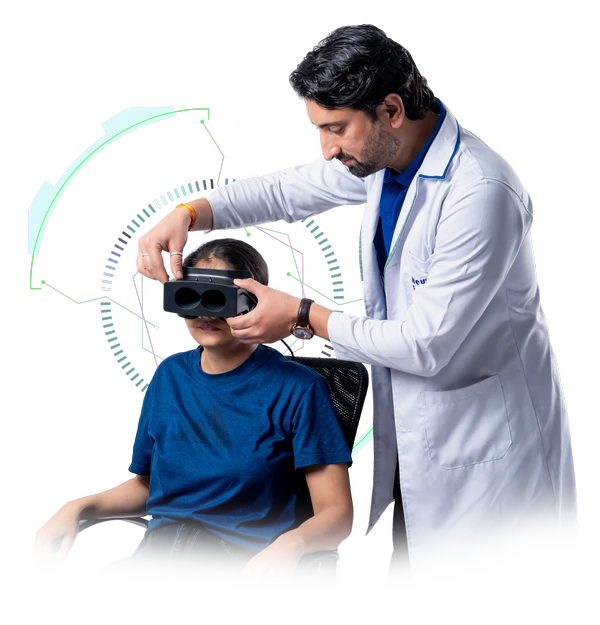
The Subjective Visual Vertical (SVV) test evaluates the otolith system, which is crucial for perceiving verticality. This test is essential for detecting abnormal subjective tilt and diagnosing various vestibular disorders.
Peripheral Vestibular Insult: Identifies the side of vestibular damage during the acute stage.
Compensated Vestibular Disorders: Aids in diagnosing vestibular disorders that have compensated over time.
Rehabilitation Effectiveness: Assesses the impact of rehabilitation on vestibular function.
Tests Included
Static SVV (Head Vertical): Measures vertical perception with the head in a vertical position.
Dynamic SVV (Head Vertical with Optokinetic Background): Assesses vertical perception with a moving background.
Nationwide care with 200+ clinics in 54+ cities.
We're expanding! Although we don't have a clinic in your city yet, we're constantly growing. Call us to find your nearest clinic to get complete treatment for your Vertigo.
Tubular Vision Goggle: Equipped with a gyroscope and accelerometer.
Head Angle Measurement: Ensures correct head positioning during testing.
For doctors and patients, the NeuroEquilibrium SVV test provides a reliable method to assess and diagnose disorders related to the perception of verticality and chronic dizziness.