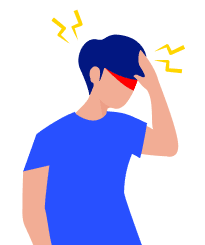
Vestibular Migraine is a form of migraine that affects the Vestibular Nerve. Like migraine, Vestibular migraine also affects women more than men and is prevalent in young and middle-aged people. In some cases, it may also occur in children. This disorder affects the day-to-day life of patients and may lead to anxiety because of the dizziness.
Symptoms
The main symptom of a vestibular migraine is recurrent spells of dizziness that may last for a few seconds to days. Vestibular Migraine patients often complain of headaches before, during or after the dizzy spells though not all vestibular migraine patients have headaches.
Other symptoms
Nausea and vomiting
Motion sensitivity – a sensation of dizziness when one moves the body, head or eyes.
Disorientation/ Brain fog
Increased sensitivity to light or sound
Motion sickness
Diagnosis
A comprehensive vertigo workup is essential to diagnose the cause of dizziness or vertigo. This workup typically includes the following tests:
Videonystagmography (VNG): Detects horizontal spontaneous nystagmus, which reduces with optic fixation.
Subjective Visual Vertical (SVV): Measures misinterpretation of the vertical plane, typically shifted to the damaged side by more than 10°.
Dynamic Visual Acuity (DVA): Assesses any reduction in visual acuity during movement.
Craniocorpography (CCG): Reveals rotation to the affected side during the Unterberger test.
Posturography
Video-Head Impulse Test(vHIT): Identifies deficits in the vestibulo-ocular reflex on the affected side.
Neurologists and Neuro-otologists are specialized in diagnosing and treating vestibular migraine.
Nationwide care with 200+ clinics in 54+ cities.
We're expanding! Although we don't have a clinic in your city yet, we're constantly growing. Call us to find your nearest clinic to get complete treatment for your Vertigo.